What Should Proper Contents Claim Documentation Include?
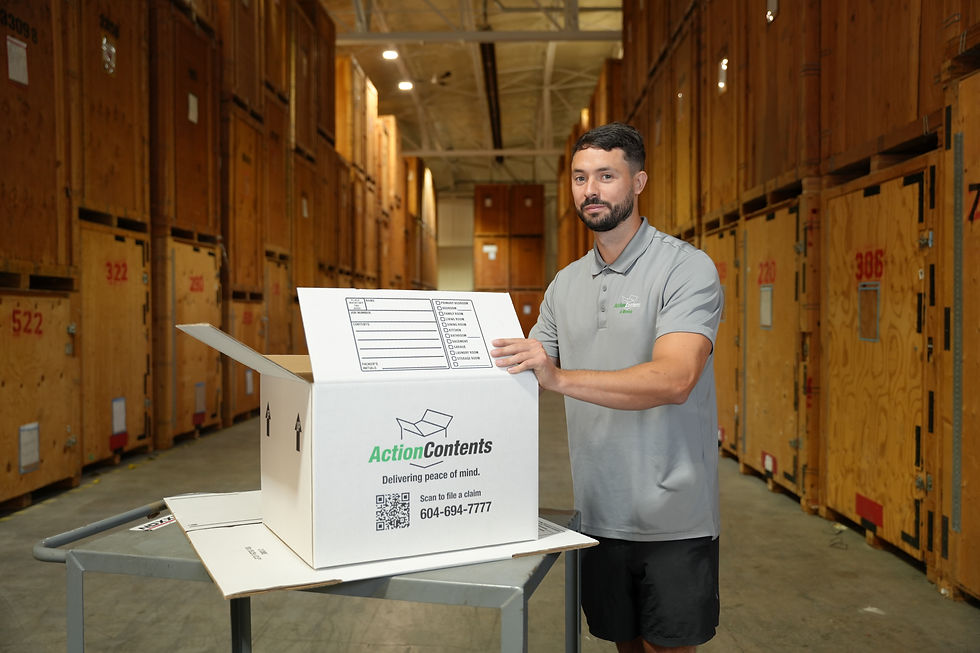
Proper contents claim documentation should record what each item is, which room it came from, its observed condition, where it was moved, whether it needs further assessment and how it connects to the reports the adjuster receives. Each entry should be tied to a tag or reference, supported by photographs and kept current as items move or change status. A contents claim is only as reliable as the record behind it.
At Action Contents, documentation is part of the contents work itself. It isn't paperwork completed after the pack-out.
Why contents documentation matters
A reliable record lets everyone on the file answer the basic questions without reconstructing the claim: what was affected, where it is now, what condition it's in and what decision is still outstanding.
That record supports item identification, retrieval from storage, damage assessment, restorable and non-restorable recommendations, schedule of loss preparation and review by the adjuster or insurer. It gives the insured a clear account of their belongings, and it's what resolves questions that surface months later.
When records are unclear, the cost appears later: delays while items are located, disputes over what existed or what condition it was in, repeated handling and unnecessary friction between the adjuster, the contractor and the policyholder.
Start at the site, before anything moves
Documentation begins before belongings are packed or handled. The project manager documents the situation with photos before anything moves. Site and room-level records capture overall conditions, which rooms are affected and unaffected, how contents were placed, which areas require pack-out or onsite manipulation and visible conditions affecting the belongings.
This record also shows how the contents relate to the restoration scope, so the contents team and the restoration contractor are working from the same picture. It describes what was observed. Environmental, remediation and causation findings belong to the qualified parties responsible for them.
The itemized inventory
The inventory is the backbone of the file. Consistency matters more than volume: each entry should be identifiable by someone who has never been inside the home.
Depending on the claim and approved scope, an entry may include:
A clear item description
The original room or area
A unique inventory or tag reference
The box, container or storage reference
Observed condition
A photographic reference
Current location or disposition
Notes flagging items that need further assessment
Records should distinguish what the team directly observed from information supplied by the insured or another party. Pre-existing damage, reported loss-related damage and findings awaiting specialist assessment should be identified clearly.
Photographs that support the record
Photographs should support the written inventory, not sit beside it as an unrelated collection. Room overviews establish context. At Action Contents, every item is photographed, and those images show its identity and condition. Images of visible damage support condition notes and any later recommendation.
The most useful photographs are taken before movement, restoration or authorized disposal, are clear enough for another stakeholder to understand and are linked to the correct inventory entry. A photograph that can't be matched to an item answers very few questions.
Accurate tagging and location tracking
Inaccurate tagging is a common source of problems in contents work. An item can be safely in storage and still be difficult to find if its tag, inventory entry and location record don't agree.
A reliable record keeps these connected:
The item or box and its inventory entry
Its original room
Its transportation grouping
Its storage vault or location
Any later retrieval or movement
When an insured asks for a specific belonging, or an adjuster needs an item inspected, accurate tagging helps the team identify the relevant item, box and storage location and plan retrieval with less unnecessary searching and handling. Inventory accuracy is customer service as much as claim administration. At Action, every item is photographed, itemized and tagged, and a dedicated project manager maintains continuity throughout the file.
Condition isn't always visible on the surface
Obvious damage is only part of the picture. Flat-pack furniture and items made from MDF or similar composite materials are common in condominiums and homes. Water or prolonged moisture exposure can cause these materials to swell, separate or lose structural integrity in ways that may not be fully repairable, and the early signs are easy to overlook during a fast pack-out.
Not every exposed MDF item is non-restorable. Careful inspection and a documented record of observed condition support accurate reporting, whatever the eventual recommendation.
Restorable and non-restorable reporting
Documentation supports decisions about cleaning, testing, repair, refurbishment or replacement. Where repair or refurbishment is practical, it should be considered first. Where it isn't, a clear non-restorable report should connect:
The identified item
Its observed condition
Supporting photographs
Why restoration may be impractical
Any repair or specialty assessment obtained
The authorization or next step required
Action assesses, documents and provides recommendations. The insurer, adjuster or other authorized party determines coverage and settlement under the policy. Disposal is a separate step with its own record.
Authorization and disposal records
A non-restorable recommendation and permission to dispose are separate records. Before disposal, Action Contents obtains documented owner consent and the relevant claim authorization. The record should identify the approved items, who provided consent and authorization, and when disposal occurred. Any items awaiting a decision remain clearly identified.
Schedule of loss preparation
A schedule of loss is the itemized list of belongings being claimed, used to evaluate the contents portion of the loss. Its reliability depends on the inventory and condition records underneath it. At Action Contents, schedule of loss preparation is part of the documentation work.
Missing descriptions, mismatched photographs, duplicate entries or overlooked damaged items all weaken the schedule and create additional review work. Requirements can differ by insurer, policy and claim, so they should be confirmed with the adjuster on each file.
Repair and specialty assessment records
Some items need input from qualified specialty providers: electronics testing, furniture or upholstery repair assessments, artwork or specialty item evaluation, cleaning or restoration recommendations and repair-versus-replacement analysis.
These records are only useful when they connect back to the correct inventory item. A repair estimate that can't be matched to a tag reference and photograph leaves the adjuster to make that connection alone.
Reconciling the contents record
Before the contents work is closed, the inventory should account for items returned, temporarily collected by the insured, sent for specialty work, disposed of with authorization, or still awaiting action. Outstanding discrepancies should be recorded and followed up.
Common documentation failures
Across the industry, the same problems recur:
Vague item descriptions
Missing or unclear photographs
Incorrect room assignments
Duplicate or omitted inventory entries
Tags that don't match the inventory record
Items moved without updating their location
Non-restorable lists unsupported by condition records
Reports that don't reconcile with the inventory
Documentation completed later from memory
Disposal before the required authorization
Each is avoidable, and each tends to surface at an inconvenient moment: during review, at settlement or when an insured asks for an item back.
What adjusters should expect to receive
A useful contents record doesn't require the adjuster to reconstruct the claim. It should be:
Organized and consistent across rooms and items
Searchable or readily reviewable
Supported by photographs linked to the right entries
Connected to each item's location and status
Clear about outstanding decisions
Updated when an item's status changes
The exact deliverables vary with the claim and its scope, but the principle holds: documentation is prepared for the needs of the claim, not only for internal records. At Action Contents, the inventory is submitted to the insurer organized and file-ready.
Documentation should move the claim forward
Good documentation isn't measured by how much information is collected. It's measured by whether the record is accurate, understandable and useful to the people making decisions about the claim.
Adjusters and restoration partners who want to discuss documentation requirements for an active or upcoming contents claim are welcome to speak with an Action Contents project manager. For an emergency pack-out, call our 24/7 dispatch at 604-694-7777.


Comments